

What Is Green Mobility?
Green Mobility develops corporate programs to reduce commute trips by private motor vehicles in cities. This does not just reduce traffic congestion, but also improves public transportation systems and quality of life.
Sustainable transportation options can help to reduce environmental impact and pollution, and can also be used to promote an active lifestyle that can bring health benefits. Examples of green mobility are:
Policy Interventions
Green mobility can be achieved by various policy instruments. The first type of policy is spatial policies that seek to reduce traffic congestion in cities while encouraging the use of sustainable transportation modes. These are often small-scale interventions (e.g. restrictions on parking spaces, speed limits or the use of bicycle lanes) and offer a lot of range of flexibility as they can be tailored to local circumstances.
Another set of instruments for policy is designed to change the modal nature of travel by promoting alternative vehicle technologies and fuels (e.g. electric vehicles, for instance) or by encouraging the sharing of routes and vehicles. These policies could also include steps to increase accessibility of public transport services by way of incentives for financial or other means, or by allowing more options.
The promotion of green mobility can also require a change in the business model as well as economic development and land-use planning. However, this requires political will and a high degree of coordination between sectors. In addition, it is important to remember that a transition from conventional to green mobility will require a large and fair shift. In cities with a high concentration of high-value sectors of employment, such as business services and information and communications technology growing green mobility could result in an increase in accessibility for communities of upper and middle classes while reducing the opportunities and jobs in areas with lower incomes.
A third set of policy instruments aims to reduce negative externalities that are associated with transportation, and promotes more sustainable energy sources including carbon pricing and renewables. These policies can be enacted at a local, national or EU level. They can be in the form of a fee or tax on the ownership of a vehicle and its operation or a more comprehensive regulation of vehicle use. They could also help promote the development of electric vehicles and charging infrastructure and encourage a shift to sustainable modes of transportation. At the local level, this might involve implementing measures aimed to promote an environment that is sustainable and establishing new habits through education, awareness campaigns and various other initiatives. At the national and EU levels, it can involve leveraging global economic stimulus to encourage consumer purchases of EVs and extending high-speed rail networks, and also supporting research and innovation in batteries and hydrogen.
EV Adoption
The rate at which vehicles move from traditional internal combustion (IC) to electric power is contingent on a variety of factors. One of these is the economic state of a country as well as its national policy. Norway and China have historically been the countries that have embraced EV production with significant incentives for consumers. These financial incentives helped a vibrant EV market to develop which, in turn, helped reduce costs.
These countries also have strong energy policies that promote sustainable energy usage. They also prioritize the building of a vast public charging network to alleviate the range anxiety of new electric vehicle users. This has had a positive effect on overall EV adoption, as shown in the data of vehicles-in-use which shows that the percentage of the fleet that is EV is increasing faster than the registration pipeline or the retirement pipeline for vehicles.
Despite these encouraging developments, EV adoption remains below expectations. The good news is the expected rate of growth will increase due to ongoing and future technological advances. This should bring down the price of batteries even more. Many Considerers and Skeptics are likely to switch to EV ownership earlier.
The rapid rise in EV ownership is also due to increasing numbers of people using EVs to travel for work. As a result, they have the opportunity to assist in shifting fleets of companies to a more environmentally friendly solution. This could reduce the carbon footprint of a company and contribute towards the goal of a world with zero mobility.
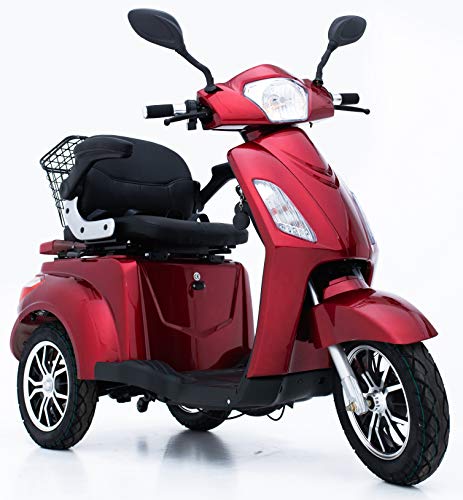
In the end, the speed at which EVs replace conventional vehicles will be affected by the decision of government policymakers to prioritize long-term investments over short-term incentives. Whatever greenpower mobility scooter takes it is essential to keep in mind that EVs need to be more of a part of the fleet to succeed and to be the most sustainable option. It's only possible with the support of all stakeholders including governments, consumers and the entire ecosystem of industry.
EV Charging Infrastructure
To benefit from electrified transport, EV owners require a reliable charging infrastructure. This includes public EV chargers that can be located in multi-unit residences, workplaces and parking garages, as well as other public facilities. This includes home charging stations, which EV drivers can set up themselves, as well as portable chargers which can help ease range anxiety.
This charging infrastructure supports the goals of clean energy in the United States and is a major contributor to electrification of the transportation system. It is being built across rural, suburban and urban communities. The Biden Administration is partnering with state and local authorities to encourage EV adoption by making it easier for them to invest in charging infrastructure.
EV charging is a simple and healthy alternative to gasoline powered vehicles and trucks. It can reduce greenhouse gas emissions, reduce pollution of the air and contribute to climate change mitigation. It can also support economic growth and generate high-wage jobs.
But, despite the numerous benefits of an EV, there are still obstacles to its widespread use, including the cost of an EV and the availability of public charging. Giving everyone equal access to EV charging could help overcome these barriers, and ensure that everyone in the community can reap the health and environmental advantages of green mobility.
This can be achieved by establishing a network of accessible EV charging stations that are open to the public at places throughout the community. It could also be promoted through programs that offer incentives for private companies and organizations to install EV charging stations on their premises. This could include rebates, tax credits and other financial benefits.
A simpler permitting process could simplify the process for homeowners and businesses alike to install EV chargers at their premises. Also, creating an established set of best practices to design and implement EV charging stations can ensure that they are efficient, effective and easy to use.
Lastly, leveraging existing technology to improve EV charger efficiency could be a way for communities create sustainable EV charging network. scooter green power can be accomplished by the integration of EV charging infrastructure with smart city technology that gathers and analyzes data to make better energy use decisions.
EV Integration
Integration of EVs into the grid requires consideration of various stakeholders and systems in urban mobility services. The integration of EVs requires new technologies for managing the flow of energy from EVs into and out of the grid. EVs also offer the chance to integrate renewable energy (RE), in the electricity supply system, via vehicle-to-grid (V2G), and grid-to car (G2V) capability. This permits EV owners to arbitrage energy prices and to enter decreased-price contracts with energy providers. Electric vehicles can also provide backup electricity during power outages, and reduce grids' need to use traditional energy sources.
To encourage the use of EVs utilities can provide incentives to customers to purchase and install EV chargers on their premises. These incentives could take the form of rebates, vouchers, or cashbacks. Additionally, utilities could implement time-of-use rates to encourage customers to shift their usage away from peak demand hours. These measures will help alleviate the burden on the electricity grid and reduce CO2 emissions.
It is crucial to design charging infrastructures that enable communication between EVs as well as the grid and the power system. This includes the installation of smart charging stations as well as EV to grid interfaces (G2V) which allow information to be transferred between the EVs and the charging station. These technologies can improve EV charge speed, and monitor EV State of Charge (SOC), provide real-time feedback to the driver.
Furthermore, a safe and secure EV charging network is crucial to ensure that users have confidence in the technology. These networks are complex and need to be designed in a manner that protects against cybersecurity threats like hacking malware, phishing and hacking. These threats could affect the security and performance of EVs as well as the grid overall.
In order to achieve a fully sustainable EV integration it is essential to examine all of the players and components involved in this process. Previous studies on EV integration have only explored technological solutions without taking into account the business aspects. This study employs secondary data to study the business model for integrating EVs in order to achieve sustainable energy services for smart cities.